
Plaquemines Parish Sex Offender Checks
The Plaquemines Parish Sheriff's Office is the local entry point. Its Sex Offender Information page leads to the designated Sheriff Alerts interface, where a visitor must read and affirmatively accept the conditions of use. Louisiana State Police, through the Bureau of Criminal Identification and Information, maintains the Louisiana State Sex Offender and Child Predator Registry. PPSO handles local registration and verification, then information flows to the central system. That division of responsibility matters when a move or other change has not yet appeared online.
Use the local or state search for a reported Plaquemines address or a known name. Use the U.S. Department of Justice National Sex Offender Public Website when the possible address crosses a state line or when the person's history may involve another jurisdiction. Results depend on information supplied by registrants, courts, corrections agencies, and local law enforcement. For a question that the screen cannot resolve, contact PPSO or the central registry at 1-800-858-0551 between 8:00 a.m. and 4:30 p.m. Central.
The PPSO homepage gathers its registry, public alerts, records, roster, and Most Wanted routes in one official location.
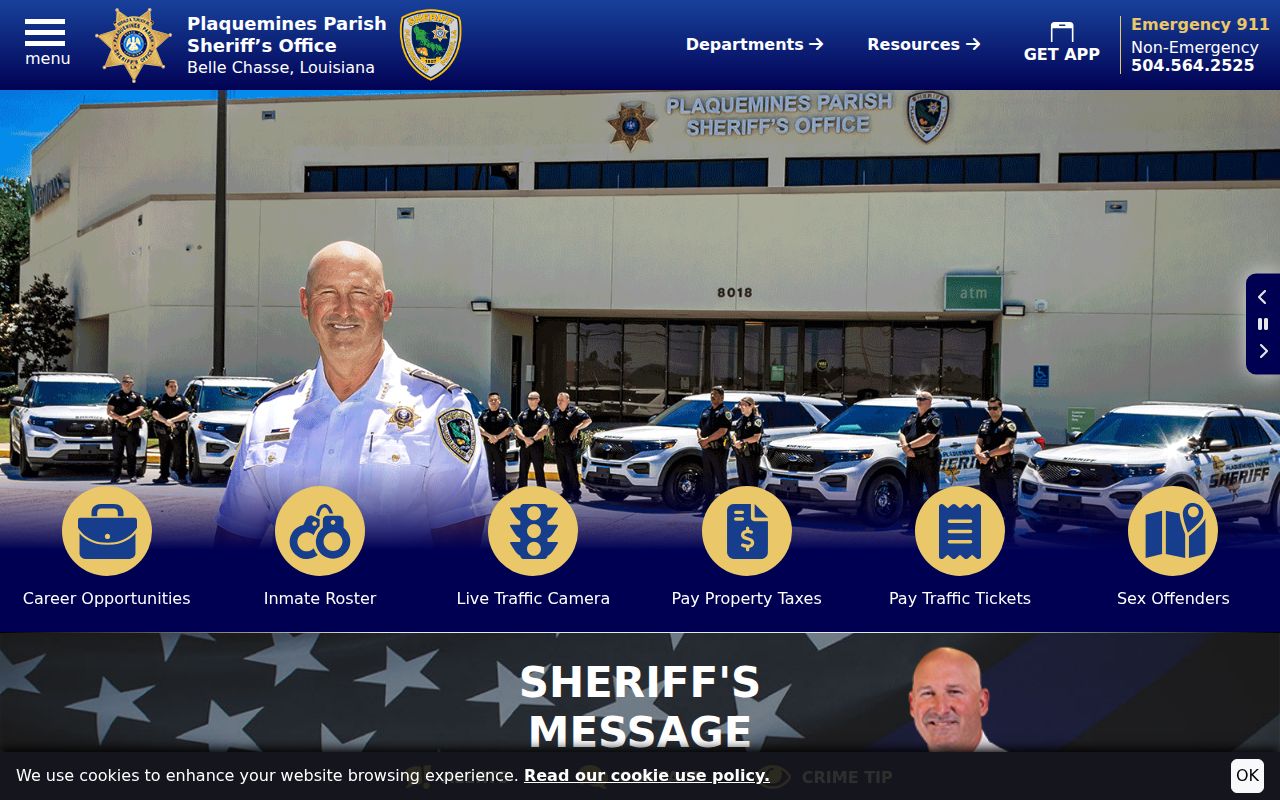
That gateway helps identify the proper official channel, but it does not replace the registry profile or direct confirmation from the registration authority.
Plaquemines Offender Search Through PPSO
PPSO's local information page is the clearest parish-specific starting point. Follow the registry link, read the complete disclaimer, and select “I AGREE” before attempting a search. Refusing the conditions blocks entry, and the vendor interface requires cookies and JavaScript. Those requirements are not incidental: they explain why a blank or looping page may be a technical failure rather than a finding of no matches.
The Sheriff's Sex Offender Information page identifies the local registry access path.
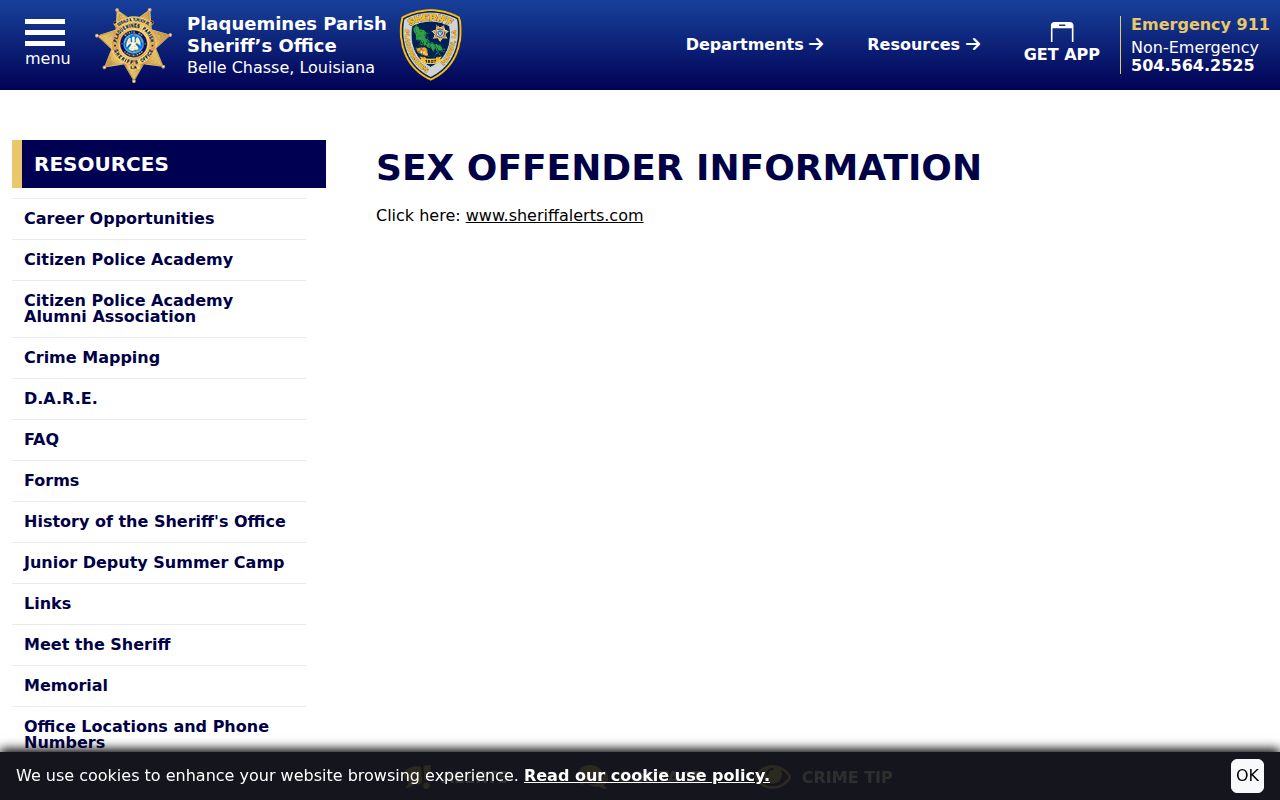
Starting there ties the search to the Plaquemines registration office and gives a direct route back to PPSO when information appears delayed or inconsistent.
Louisiana State Registry Searches
Search carefully and keep the question narrow. A name result answers whether a matching reported registrant appears. An address or proximity result identifies reported registered locations around a place. Neither proves that everyone living at a returned address is registered, that an absent person has no criminal record, or that an unlisted offense never occurred.
- Open PPSO's registry route, read the official conditions, and accept them to enter.
- Search by the person's name or use the available address and proximity option for a location-based check.
- Compare the returned name, photo, aliases, physical details, and reported address before deciding that a profile is the intended person.
- Open the full profile, note its status and dates, and contact PPSO when a recent move or apparent discrepancy needs verification.
| Search Method | Type | Required | Notes |
|---|---|---|---|
| Name | Text | No | Use known spelling and confirm identity from the complete profile. |
| Address | Location | No | Returns reported registered locations connected to the searched place. |
| Proximity search | Map/location | No | Current radius choices must be checked in the live vendor form. |
| Cross-state search | NSOPW | No | Useful near a boundary or for possible registration in another state. |
The Louisiana State Police registry page explains the central registry and supplies its official search entry.
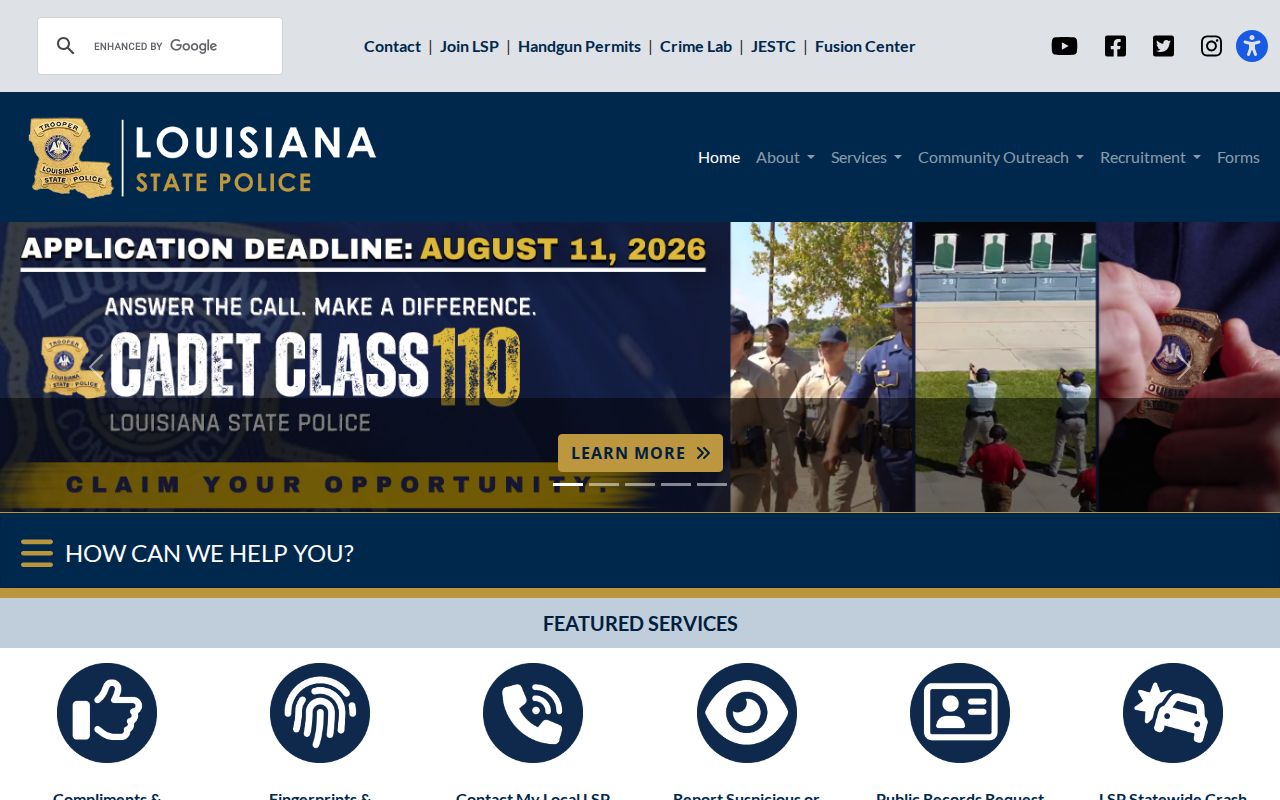
This state layer is the central source, while PPSO remains the local contact for Plaquemines registration questions.
Plaquemines Registry Search Acknowledgment
The conditions screen establishes limits before displaying sensitive location information. The official notice says registry data are only as timely as reports from registrants and contributing agencies. A returned point should therefore be read as a reported registered location, and a missing or blank field should not be converted into a factual conclusion. Profile data should also be dated when cited because compliance status, addresses, vehicles, and photographs may change.
If the form fails, do not infer “no record.” Try the official interface with cookies and JavaScript enabled, then contact the central registry or PPSO. The central registry also accepts mail at P.O. Box 66614, Box A-6, Baton Rouge, LA 70896. This fallback is especially important for a person who recently moved, since statutory reporting, local transmission, and central posting happen as separate steps.
Registry Profiles: What They Show
A public profile combines identity details with registration information so a reader can distinguish people and understand the reported status. It may include work, school, vehicle, and identifying-mark data in addition to the fields summarized below. Availability depends on what has been reported and what the public system displays; blank does not mean none.
| Name & Aliases | Reported legal name and other names used to help distinguish a match. |
|---|---|
| Photo & Physical Description | Photograph, birth and physical details, and potentially scars, marks, or tattoos. |
| Registered Address | Reported residence or temporary lodging information; verify recent changes locally. |
| Offense & Statute | Underlying offense, legal citation, relevant date, and disposition information where displayed. |
| Category | Louisiana statutory registration category and duration, not a published public risk score. |
| Registration Status | Reported compliance information and related verification details as available. |
Read the complete record rather than relying on a map marker or name alone. A shared name, older photograph, or multi-unit address can produce a mistaken identification if the remaining profile fields are ignored.
Plaquemines Offender Registration Deadlines
Louisiana's initial registration deadline is generally three business days after establishing residence, after conviction when the person is not confined, or after release. R.S. 15:542 requires extensive identifying information, including aliases, residence and temporary lodging, physical and birth details, identification, fingerprints and palmprints, a photograph, offense and disposition information, work or school information, vehicles, phone numbers, and online identifiers.
PPSO performs the local registration function for every Plaquemines community because the parish has no incorporated municipalities or city police departments. Belle Chasse, Port Sulphur, Empire, Buras, Boothville, Triumph, and Venice are census-designated places, not separate cities with their own registries. A resident should not search for a municipal registry office or assume a named community has a distinct database.
Registration Levels and Duties in Louisiana
Louisiana uses offense and duration categories under R.S. 15:544 rather than publishing a public risk score. The general period is 15 years; an offense against a minor generally carries 25 years; aggravated, repeat, and specified categories carry lifetime registration. A qualifying person in the baseline category may petition a court to reduce 15 years to 10 after a clean ten-year period and documented treatment, but that possibility is a court process, not an automatic change.
| Louisiana Category | Duration | Verification Frequency |
|---|---|---|
| General statutory category | 15 years, with possible court reduction in a qualifying case | Annually |
| Offense against a minor | 25 years | Every six months |
| Aggravated, enumerated lifetime, or repeat registrant | Life | Every three months for aggravated or repeat categories |
Verification frequency comes from R.S. 15:542.1.1. The interval describes a legal reporting duty, not how often a member of the public should search or how dangerous a person is. Use the category and dates to understand the record, not to invent a score that Louisiana does not publish.
Plaquemines Registry Notice Distances
R.S. 15:542.1 allows community notice to reach residences and businesses within one mile in rural areas and within 0.3 mile in urban or suburban areas, along with other recipients identified by statute. That distinction matters in a long parish containing both denser population centers and rural stretches. It does not change the underlying registry category, and it should not be treated as a boundary between safety and danger.
For suspected noncompliance or an address that appears wrong, save the relevant public profile details and report the concern to PPSO. Do not visit the location, question neighbors as an investigator, follow anyone, or confront the person or household. Law enforcement can compare the public information with registration records and determine whether follow-up is warranted.
NSOPW Extends Plaquemines Offender Searches
NSOPW is the useful second layer when a person may have lived outside Louisiana or a location-based inquiry reaches beyond one state's data. It aggregates participating jurisdiction registries, but the same identity and timeliness cautions apply. Review the source jurisdiction's profile and contact that jurisdiction when a match needs confirmation.
The Department of Justice NSOPW search provides the national registry interface.
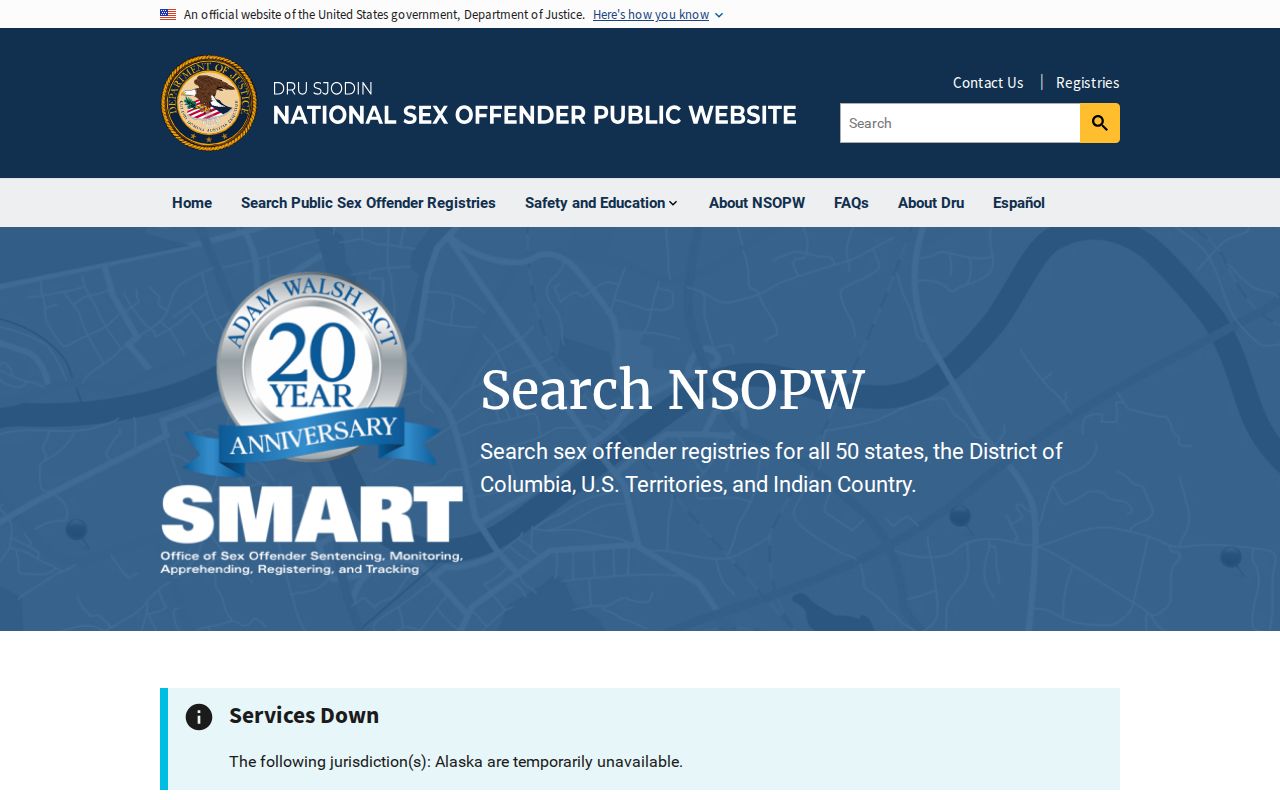
Use it after the Plaquemines and Louisiana routes when the inquiry is cross-state, then return to the originating registry for the most direct official details.
Using Registry Information Lawfully
The registry supports awareness, safety planning, and lawful community notification. It does not authorize a private person to punish, threaten, investigate, or publicly target a registrant or family. Apparent errors and suspected failures to register belong with PPSO or Louisiana State Police, which can review nonpublic and current information that a public visitor cannot see.
Louisiana misuse warning: Using registry information to threaten, intimidate, harass, or harm a registrant or family can lead to criminal prosecution or civil liability under the registry's official warning. Report a concern to law enforcement and do not confront anyone.
A profile also should not be stretched beyond its stated facts. It records a statutory registration status and reported details; it is not proof about every person at an address, a complete criminal-history report, or permission to deny rights or services outside what law allows.